Detecting lung cancer at early stages is crucial to improve treatment options and survival. With the aim of diagnosing any…
Detecting lung cancer at early stages is crucial to improve treatment options and survival. With the aim of diagnosing any possible lung tumor in early stages and contributing to reduce mortality, Ascires launched in 2022 an Early Detection Program. Now, the new Ascires Hospital(Valencia) offers this program in a ‘single act’, i.e., with specialist consultation, tests, results and follow-up guidelines in a single visit.
“In the early stages, lung cancer does not cause symptoms. And, when they do appear, they can be confused with other benign pathologies because they are quite nonspecific (cough, chest pain, tiredness or difficulty breathing, among others). For this reason, in 85% of cases, diagnosis comes late, when the therapeutic and curative options are very limited,” explains Dr. Asier Bengoechea, a pulmonologist at Ascires and coordinator of the program.
This is the key that explains why lung cancer continues to be the most lethal cancer (23,239 deaths in 2024), with an average survival rate of 16% in the case of men and 23.5% in women, according to the recent report “Las cifras del cáncer en España 2026”, by the Spanish Society of Medical Oncology(SEOM). However, if this type of tumor is detected at stage I, when surgery and different therapeutic approaches can be used, the chances of survival increase to 90%. This year, according to the same SEOM report, it is estimated that 34,908 new cases of lung cancer will be registered in our country. The ability to detect them in time determines the chances of overcoming the disease. It is in this context that early detection programs for the at-risk population play a fundamental role.
Tobacco is responsible for 90% of lung cancer cases, which explains why all the international early detection protocols successfully developed in the United States and Europe are mainly aimed at the population with a history of smoking.
Along the same lines, the Early Detection of Lung Cancer Program of Ascires is aimed at the highest risk group: smokers or ex-smokers over 50 years of age, with a cumulative consumption equivalent to 20 cigarettes a day for at least 20 years.
The risk of lung cancer in a person who smokes is 20 times higher than that of a non-smoker. “Even so, while periodic check-ups to prevent breast or colon cancer are managing to significantly reduce mortality in these types of tumors, there is a lack of awareness among the smoking population to check their lungs regularly,” the pulmonologist points out.
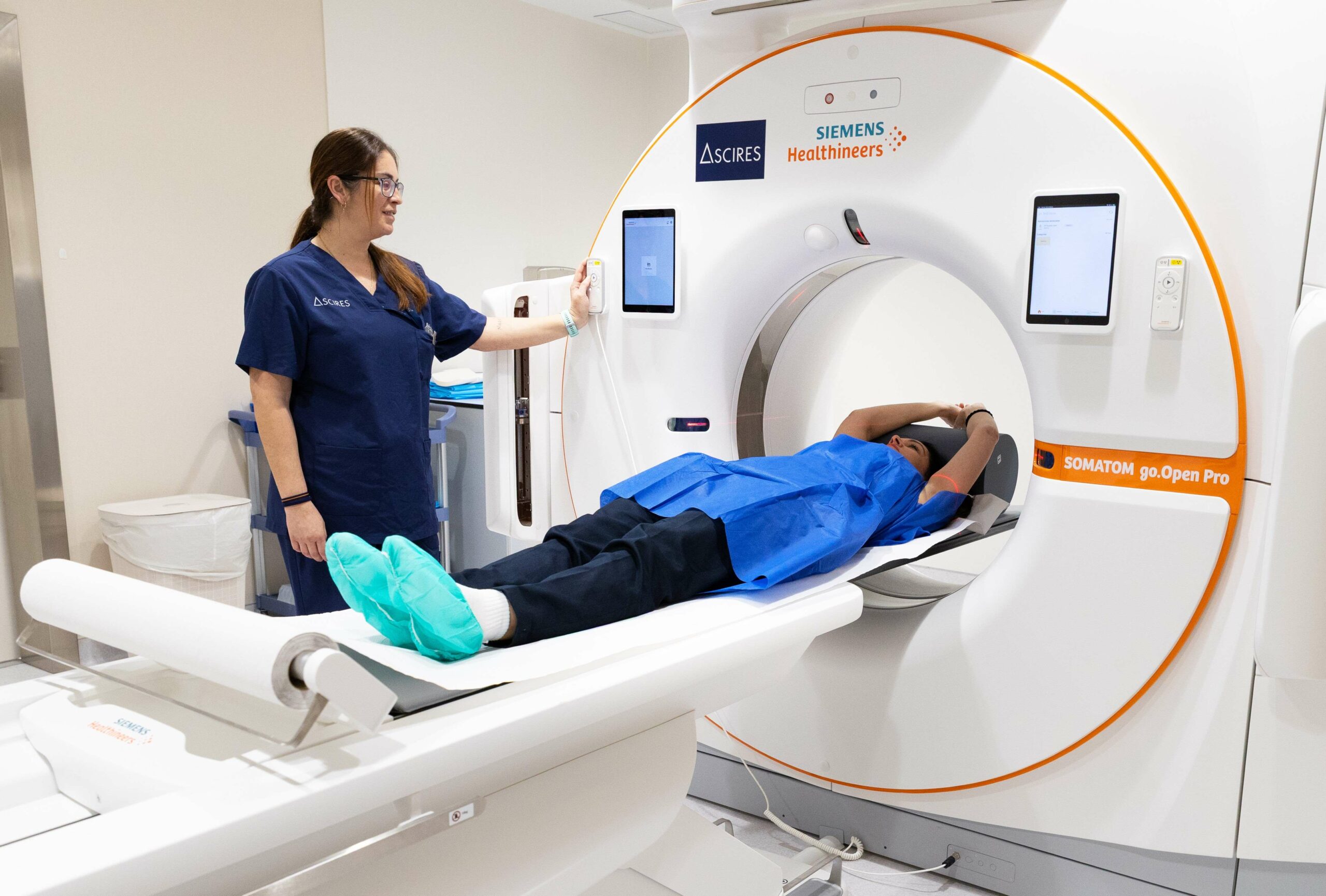
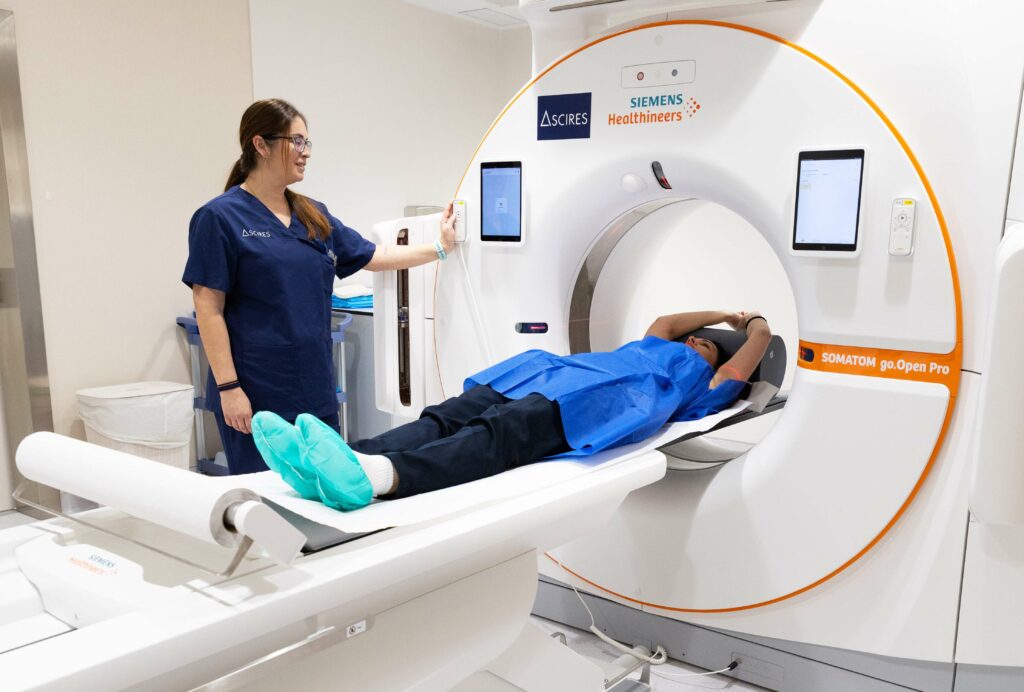
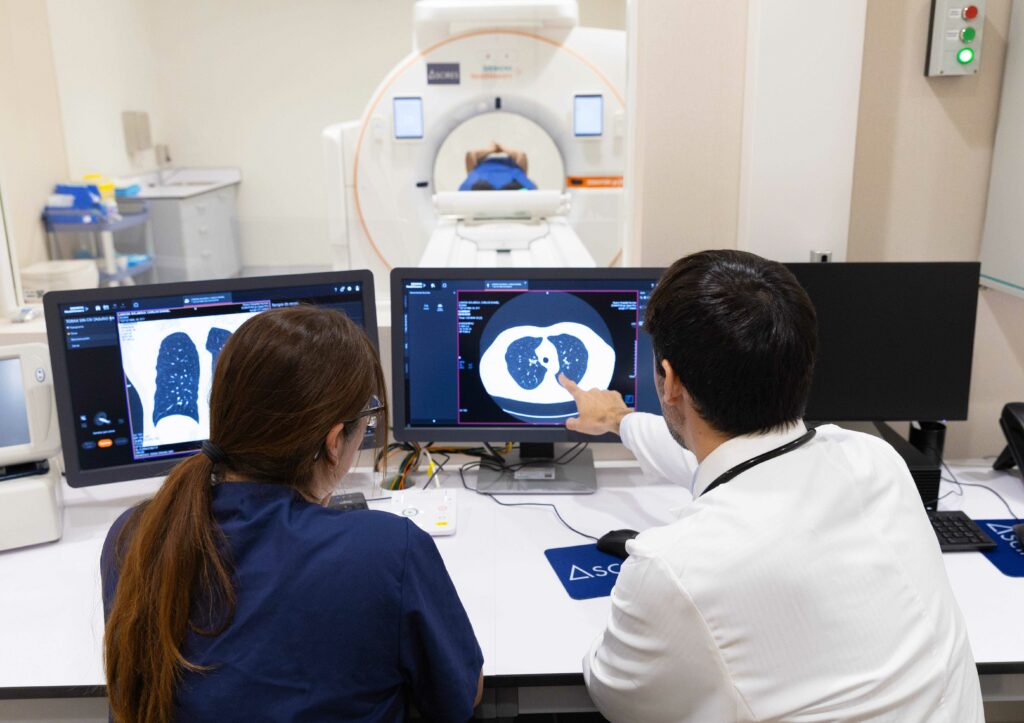
The follow-up of the patients included in the program starts with a consultation with the Pneumology specialist, in which a clinical history, examination and pulmonary function test (spirometry) are performed. The patient is then submitted to a computed tomography (popularly known as TAC) of ultra low dose of radiation, to return again to consultation to know the results and the guidelines to follow.
At Ascires Hospital, this entire process is performed in a single visit and on the same day, including results within a maximum of two hours after the CT scan.
Although the aim of the program is to detect a possible lung tumor in its most incipient stage, this test can also detect other possible conditions, such as calcifications in coronary arteries, interstitial pulmonary pathology, COPD, pulmonary emphysema, etc. “Although they are not as serious, diagnosing and treating them early is key to improving the patient’s quality of life,” says the pulmonologist.
Lung cancer is the cancer that causes the most deaths per year in Spain. However, while in the male population deaths from this cause are decreasing (in line with the reduction in tobacco consumption), the increase in mortality in women is a cause for concern.
“For the first time in Spain, lung cancer has overtaken breast cancer as the leading cause of cancer death in the female population,” warns Dr. Rodolfo Chicas-Sett, radiation oncologist at Ascires. “This is explained by their later incorporation into the smoking habit – from the 1970s onwards – and also demonstrates the importance of women smokers and former smokers joining early detection protocols.
The use of electronic cigarettes and vapes, on the rise among the young population since the end of the pandemic, is another factor that is increasing the risk of contracting this type of cancer, according to SEOM.
The multidisciplinary component is one of the highlights of the Early Cancer Detection Program at Ascires Hospital and allows us to offer a precise and comprehensive approach to each patient. The professional team includes pulmonologists, radiologists, specialists in Medical Oncology and Radiation Oncology, thoracic surgeons and family physicians, among others.
Ascires is the pioneer biomedical group in Spain in Diagnostic Imaging, Nuclear Medicine, Medical Genetics and Image-guided Radiation Oncology. It develops its activity in the Ascires Hospital (Valencia), as well as in its own network of Biomedical Clinics in the Valencian Community and Catalonia. With a track record of more than 45 years and a team of more than 600 professionals, the Ascires group focuses its work on diagnosis and treatment, reinvesting an average of 20% of its profits in R&D&I every year. The group is focused on personalized precision medicine, thanks to the development of artificial intelligence biomarkers and proprietary diagnostic algorithms.