Valencia, 3 July 2025 – The Regional Ministry of Innovation, Industry, Trade and Tourism is funding the Lattice project through…
Valencia, 3 July 2025 – The Regional Ministry of Innovation, Industry, Trade and Tourism is funding the Lattice project through Ivace+i. The project aims to create an innovative software tool to treat certain tumours requiring radiotherapy with greater precision.
Radiotherapy today offers a high level of precision when targeting tumours. To achieve this, radiation doses are carefully planned to destroy the lesion while minimising damage to the surrounding healthy tissue.
However, when tumours are particularly large or located close to vital organs, it becomes difficult to deliver an effective dose without causing potentially harmful side effects to nearby tissues.
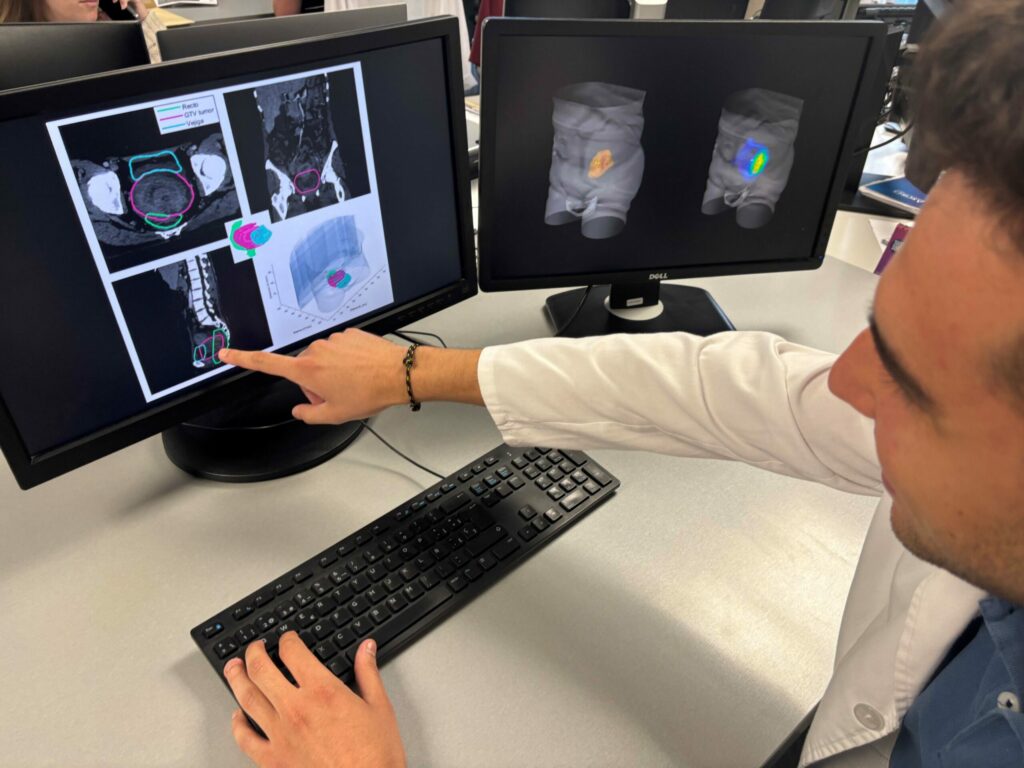
Lattice was created with the aim of providing a more precise approach to the treatment of these types of tumours. This initiative proposes a different strategy from conventional radiotherapy. Instead of treating the entire tumour uniformly, higher doses of radiation are delivered to small internal areas, while the rest of the lesion receives a lower dose.
The technique uses automatic algorithms to optimise the distribution of high radiation doses within the tumour. The goal is to improve treatment precision while minimising damage to the surrounding healthy tissues.
This new “grid” or “mesh” distribution — reflected in the name Lattice, meaning framework or network — aims to trigger a biological chain response affecting the entire tumour. This makes it possible to achieve a more effective treatment without increasing side effects.
Ultimately, the project adapts radiation delivery to the shape and size of the tumour, reduces potential toxicity to healthy tissues, and personalises treatment by adjusting it to the specific characteristics of each patient and their condition. These optimisations improve the overall effectiveness of treatment.
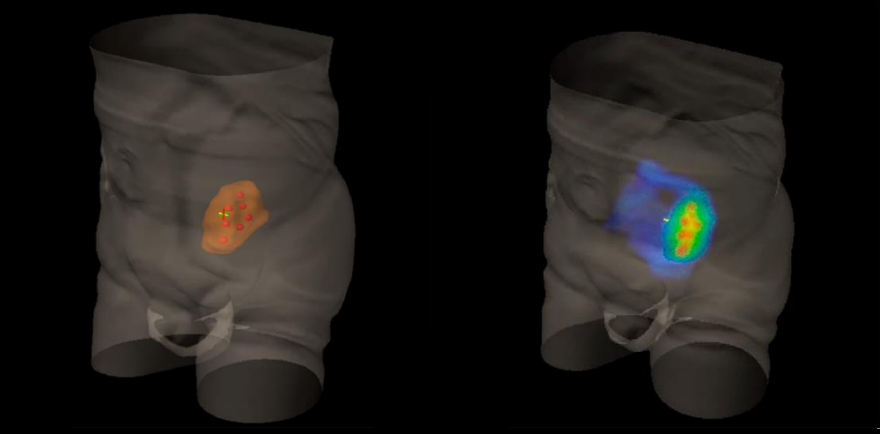
The project’s differential value lies in its comprehensive and technology-driven approach to a key radiotherapy challenge: the treatment planning of large tumours. The software not only introduces innovation into healthcare services, but also positively impacts the entire radiotherapy value chain.
Among the advances implemented, Lattice improves treatment planning by increasing precision and reducing the need for additional interventions.
In addition, side effects are minimised thanks to more personalised and accurately targeted dose delivery, improving patients’ quality of life while reducing costs associated with healthcare complications. By enhancing the efficiency and rational planning of the resources required for treatment, Lattice also optimises the overall production process.
Finally, the tool supports continuous innovation in the field of cancer treatment. With significant potential for research and development, Lattice may serve as a foundation for future advances in radiotherapy.
The Lattice project is led and coordinated by Ascires Grupo Biomédico. Ascires is responsible for the clinical aspects of the initiative, supported by a highly experienced team of engineers and radiation oncologists specialising in cancer diagnosis and treatment.
The contribution of Ascires professionals ranges from the clinical research of key variables to the acquisition and subsequent processing of medical imaging. Their work also includes the dissemination of the knowledge generated throughout the project and the validation of the software developed.
With more than 40 years of experience in precision diagnostics, Ascires combines medical imaging with genetic diagnostics, enabling a comprehensive and highly accurate assessment of each disease to be treated.
The Lattice project is developed in collaboration with Universitat Politècnica de València (UPV) through researcher David Moratal, Professor of Medical Imaging and Electronics and Director of the Biomedical Image Analysis Group at the Centre for Biomaterials and Tissue Engineering.
Professor Moratal’s team contributes its expertise in biomedical image processing and analysis, imaging physics, magnetic resonance data acquisition and reconstruction, as well as the development of new methods and applications in medical imaging. The group’s main area of focus is magnetic resonance imaging (MRI).
Lattice also involves the participation of Vicomtech, a technology centre specialised in virtual reality, augmented reality and advanced technologies applied to healthcare.
The centre will contribute to the design and development of tools aimed at optimising radiotherapy planning and treatment. It will also be responsible for integrating these resources into the simulation platform on which the Lattice pilot project will be carried out.
In addition, the Vicomtech team will contribute its expertise to ensure that the solutions developed are accessible and suitable for individuals with disabilities and diverse functional needs.
The preliminary results of the Lattice project will be presented next July in Copenhagen, Denmark, during the Annual International Conference of the IEEE Engineering in Medicine and Biology Society, the world’s leading international scientific congress in biomedical engineering.
Specifically, the study “Automated Lattice Technique-Based Algorithm for High-Dose Sphere Distribution in Radiotherapy” will be presented. The research was developed by investigators Mario Muñoz-Escobar, Jorge Rafael Pastor-Peidro, Rodolfo Augusto Chicas-Sett, José Manuel Santabárbara and David Moratal within the framework of the Joint Research Unit between Ascires Grupo Biomédico and Universitat Politècnica de València.