Achieving and maintaining a healthy weight in the long term can be a challenge for many people. Overweight and obesity are complex health conditions influenced by metabolic, hormonal and lifestyle-related factors.
At the Nutritional Health Unit at Hospital Ascires, we take a comprehensive, personalised approach to overweight and obesity, aiming to improve your health, body composition and quality of life.
Our multidisciplinary team works together to design the most appropriate treatment for you, helping you achieve effective, sustainable and long-lasting results safely and healthily.
Multidisciplinary team
At the Ascires Nutritional Health Unit, nine specialist departments work together to provide comprehensive care for every patient with overweight or obesity.

Comprehensive treatments for overweight and obesity
At Ascires, we personalise every weight management programme according to each person’s needs and clinical requirements.
Advanced medical technology for maximum precision
At Hospital Ascires, we use state-of-the-art medical technology to tailor nutritional, exercise and pharmacological recommendations as precisely as possible, providing highly personalised programmes.
DEXA body composition scanning provides a precise analysis of body composition, including:
This information allows us to objectively monitor your progress throughout the programme.
This test accurately measures your resting energy expenditure, helping us personalise nutritional recommendations and tailor treatment to your body’s actual energy requirements.
Exercise testing with gas analysis allows us to objectively assess your functional capacity and how your body responds to physical activity.
The results help us design a personalised and safe exercise programme tailored to each patient’s cardiovascular fitness and functional capacity.
Bariatric Surgery in Valencia
Bariatric surgery is one of the most effective treatment options for selected patients. At the Ascires Nutritional Health Unit, we perform procedures such as sleeve gastrectomy and gastric bypass, as well as offering non-surgical alternatives such as the intragastric balloon.
All options are assessed individually and supported by coordinated multidisciplinary follow-up to maximise results and help maintain them in the long term.
Doctors and Healthcare Professionals
Dr Emilio Veintimilla is an endocrinologist at Ascires, with experience and specific training in andrology.

Specialist in Clinical Nutrition and head of the Nutrition Unit at Ascires, expert in body composition assessment and nutritional support...

Dr. María del Mar Contell is a specialist in Family and Community Medicine, specialised in microbiota and women’s health at...
More than 7 years of experience as a pulmonologist, which he combines with his medical work in the Emergency Department...

Dr Angélica Aponte is a specialist in Family and Community Medicine at Ascires. She has extensive experience in General Medicine...
Dr Isabel Merí is a physician specialist in Psychiatry at Ascires. She graduated in Medicine and Surgery in 2018 and...

Dr Aragon Gawinska has been a neurologist at Ascires since 2024. She graduated in Medicine from the Medical University of...
19 years working in cardiology departments at public and private centres at national and international level, with specific training in...
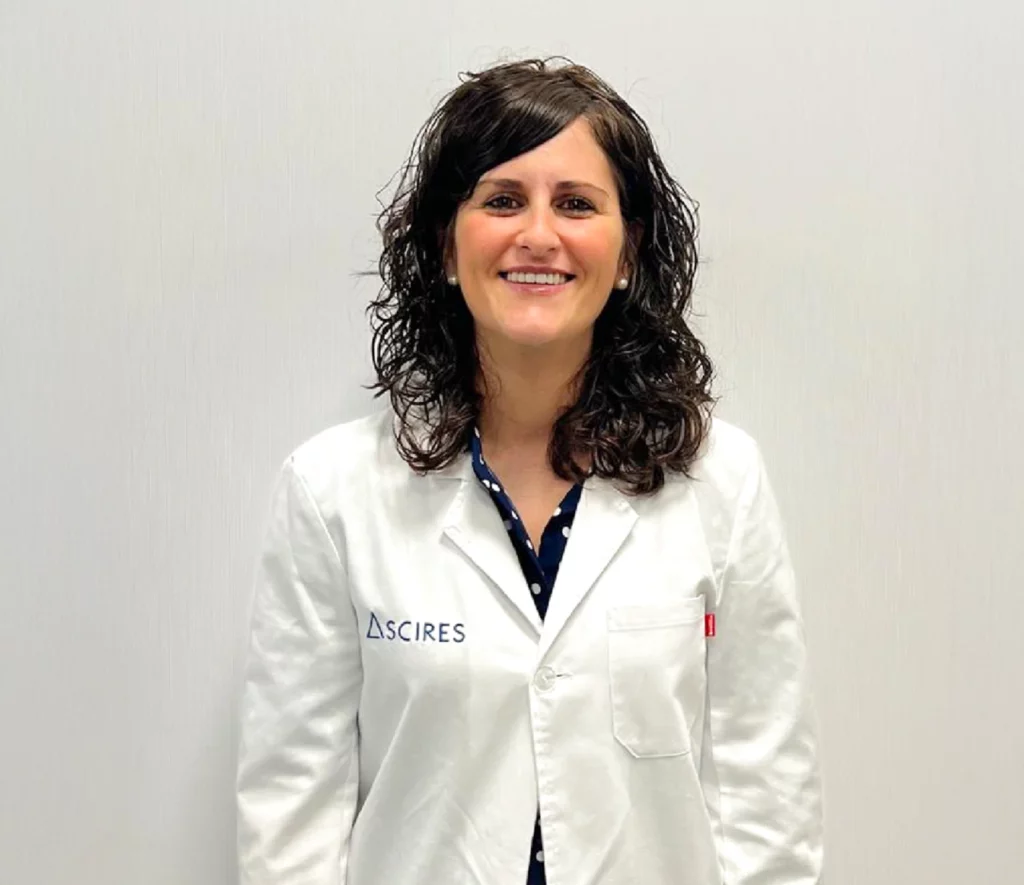
16 years working in cardiology departments at public and private centres, with extensive dedication to Cardiac Imaging (Cardiac MRI and...

Medical Director of the Ascires Group and Head of the Cardiology Department, with 30 years of national and international experience...

Extensive clinical and research experience in Cardiology Departments at national and international hospitals (Switzerland and Germany). Her research career has...

We recommend visiting the Ascires Nutritional Health Unit if you have obesity or overweight and find it difficult to lose weight or maintain weight loss despite making changes to your diet and lifestyle.
We also recommend consulting our specialist team if excess weight is accompanied by health problems such as type 2 diabetes, high blood pressure, sleep apnoea, high cholesterol, fatty liver disease, joint pain or other obesity-related conditions.
Obesity is a chronic, multifactorial disease that may require specialised medical treatment. At the Nutritional Health Unit, we carry out an individual assessment to understand your health status, the causes and factors contributing to excess weight, and the most appropriate treatment options for you. Treatment may include changes to your diet and physical activity, psychological support, medication and, in certain cases, bariatric surgery.
You do not need to wait until you are significantly overweight to seek help. A specialist assessment can help prevent obesity from progressing and reduce the risk of complications.
Bariatric surgery, also known as obesity surgery or metabolic surgery, may be recommended for people with obesity who meet certain medical criteria and have been assessed by a specialist multidisciplinary team.
In general, bariatric surgery may be considered particularly for people with a body mass index (BMI) of 40 kg/m² or above, or a BMI of 35 kg/m² or above when obesity-related conditions are present, such as type 2 diabetes, high blood pressure, obstructive sleep apnoea, cardiovascular disease or other significant complications. In certain patients with a lower BMI and significant metabolic conditions, surgery may also be considered in line with clinical recommendations and individual circumstances.
The decision is not based on BMI alone. To determine whether someone is a suitable candidate for bariatric surgery, their overall health, associated conditions, previous treatments, lifestyle habits, psychological wellbeing and ability to maintain medical and nutritional follow-up after surgery must all be assessed.
For this reason, bariatric surgery should always be recommended on an individual basis following a specialist medical assessment.
The causes of obesity are varied. Obesity is a chronic, multifactorial disease involving genetic, metabolic, hormonal, environmental, psychological and lifestyle-related factors.
Diet, a sedentary lifestyle and a lack of physical activity can contribute to weight gain, but they are not the only factors involved. Genetic predisposition, insufficient sleep, stress, certain mental health conditions, some medications, hormonal imbalances, and social and family circumstances can also play a role.
The body also has mechanisms that regulate hunger, fullness and energy expenditure. These mechanisms can make weight loss more difficult and encourage weight regain. Obesity should therefore not be seen simply as a lack of willpower or discipline.
Identifying the factors contributing to weight gain is essential to developing effective, personalised obesity treatment that meets each patient’s needs.
Losing weight and keeping it off can be difficult because obesity is a complex disease involving multiple factors. It is not simply a matter of eating more or less or exercising more.
When a person loses weight, the body can activate mechanisms that increase hunger and reduce energy expenditure. Genetics, metabolism, sleep, stress, anxiety, certain medications, some medical conditions and environmental factors can also make losing weight more difficult.
Very restrictive diets may also lead to initial weight loss, but some or all of the weight lost may subsequently be regained. For this reason, obesity treatment should be personalised and focus not only on losing weight but also on maintaining the results and improving overall health.
If you have tried to lose weight several times without achieving lasting results, an assessment at the Nutritional Health Unit at Hospital Ascires can help identify the factors making weight loss difficult and establish a treatment plan tailored to your circumstances.
Obesity can increase the risk of developing various diseases and affect multiple organs and systems in the body. The main complications of obesity include type 2 diabetes, high blood pressure, cardiovascular disease, high cholesterol, fatty liver disease, obstructive sleep apnoea and musculoskeletal problems.
Obesity may also be associated with certain types of cancer and affect reproductive health, mobility and quality of life. The level of risk depends on several factors, including the degree and duration of obesity, the distribution of body fat and the presence of other medical conditions.
The good news is that clinically significant weight loss can improve many of these conditions and reduce the risk of future complications. Treating obesity early through a comprehensive medical approach is therefore important for protecting long-term health.
At the Nutritional Health Unit at Hospital Ascires, we develop a personalised plan to help you lose weight, improve your body composition and enhance your overall health safely and progressively.