At the Arrhythmia Unit of Ascires, our specialists have extensive experience in cardiac electrophysiology, applying the most advanced treatments for atrial fibrillation and ventricular and supraventricular arrhythmias. We offer treatments such as:
Our approach is comprehensive: we treat the arrhythmia and its causes, improving the patient’s cardiovascular and overall health.
Medical team
Specialist in cardiac electrophysiology and advanced treatment of arrhythmias, with extensive experience in atrial fibrillation, prevention of sudden cardiac death and physiological cardiac pacing. He combines his clinical practice with research and teaching activities in national and international scientific societies.
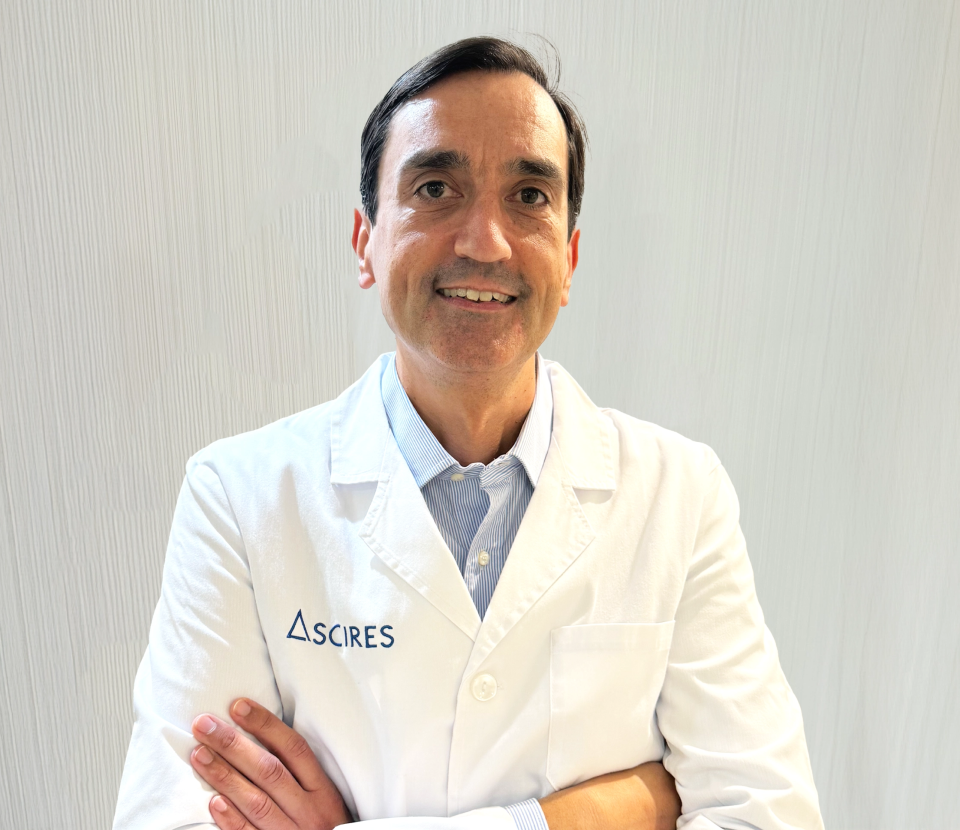
Consultant cardiologist and electrophysiology specialist at Ascires, with extensive experience and specialised training in physiological pacing, ventricular tachycardia and the...
Our commitment to patient care
We have our own electrophysiology laboratory equipped with all the necessary technology in order to provide the most comprehensive care for each patient.
Physiological cardiac pacing
In patients who require a pacemaker, we offer conduction system pacing: the most advanced technique to ensure the heartbeat resembles its natural rhythm as closely as possible, achieving a more coordinated and efficient contraction.
Our cardiologists specialised in electrophysiology have extensive experience in this field, with the aim of avoiding the long-term harmful effects associated with conventional non-physiological pacing.
Related services

A pacemaker is a device that stimulates and controls the heart rhythm. A pacemaker is necessary when there is a heart rhythm disorder that causes the heart not to beat properly: a rhythm that is too slow, irregular heartbeats, prolonged pauses or heart failure.
The pacemaker is placed over the pectoral muscle, near the collarbone and under the skin. In other words, pacemaker implantation requires surgery.
It works thanks to a battery that emits electrical impulses or signals, which tell the heart when it should beat. There are three types of pacemakers:
Atrial fibrillation is a heart rhythm disorder that causes an irregular rhythm and, generally, tachycardia. In other words, atrial fibrillation is a type of arrhythmia. The risks of atrial fibrillation include the formation of thrombi or blood clots in the heart, which can lead to a risk of stroke or heart failure, among other complications.
How can atrial fibrillation be detected? Not all people experience symptoms. However, for those who are symptomatic, the most common are:
To treat atrial fibrillation, we must first diagnose the AF phenotype the patient has:
Once we know the phenotype, another important factor is whether the patient is symptomatic or asymptomatic.
Once we have this information, we can determine the best treatment for the patient, which usually begins with antiarrhythmic drugs.
If the patient is resistant to medication, the most appropriate treatment is catheter ablation for atrial fibrillation. This treatment has a Class I indication and level A evidence for paroxysmal and persistent atrial fibrillation.
In cases where the patient does not tolerate medication or does not wish to take it continuously, catheter ablation may also be indicated as a first-line treatment, according to the European Clinical Practice Guidelines. Likewise, in asymptomatic patients with both phenotypes, catheter ablation may also be indicated in selected cases.
Beyond isolated treatment for atrial fibrillation, at Ascires we develop a comprehensive approach for the patient by treating and modifying the risk factors associated with the development of this arrhythmia:
For the proper management and treatment of all these risk factors, it is essential to include the patient in a Multidisciplinary Arrhythmia Unit, in which cardiologists, pulmonologists and endocrinologists, among others, work in a coordinated manner to provide the patient with a comprehensive treatment plan.
There are two types of heart rhythm disorders:
Ascires has the ENS certification with the MEDIA category for its medical centers in the Valencian Community and Madrid.