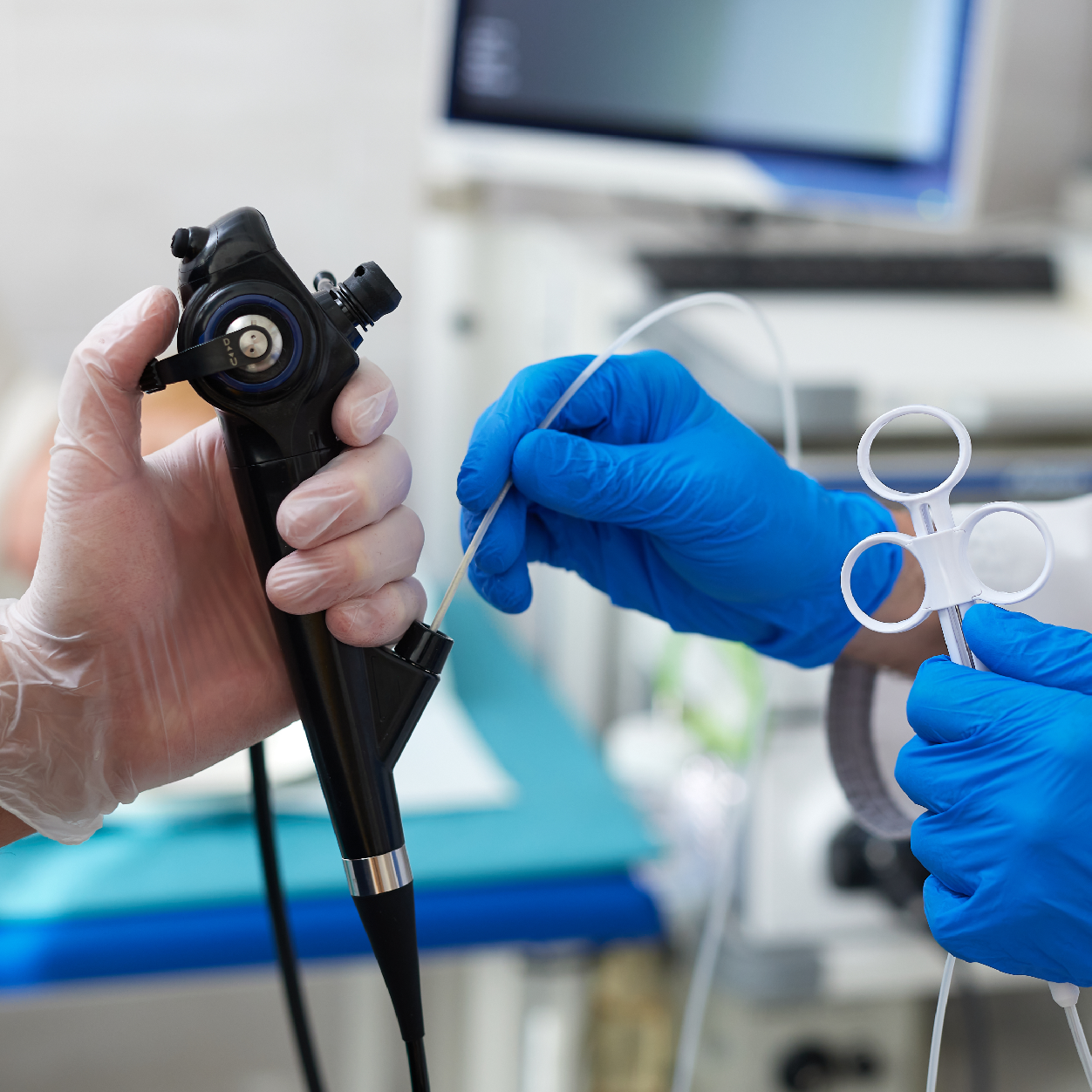
Our state-of-the-art endoscopy systems are supported by real-time high-definition imaging and virtual chromoendoscopy. This advanced technology enables the early detection of lesions and supports accurate diagnosis of a wide range of conditions affecting the digestive tract.
Test characteristics
Does it require sedation?: Types of digestive endoscopy in Valencia
We perform the following endoscopic procedures:
Related services
Colonoscopy preparation involves thoroughly cleansing the colon to ensure clear visualisation during the procedure. This typically includes following a special diet in the days beforehand (usually low in fibre) and taking a laxative solution prescribed by the medical team, which induces bowel movements to empty the intestine. It is essential to follow the instructions carefully, as proper preparation is key to ensuring an accurate examination and avoiding the need to repeat the procedure.
A colonoscopy usually takes between 20 and 30 minutes, although this may vary from patient to patient. If polyps or other lesions are detected, the procedure may take slightly longer, as they can often be treated or removed during the same examination. This should be considered alongside the preparation time and the recovery period following sedation.
Yes, colonoscopy is the most effective test for detecting colorectal cancer at an early stage. It allows direct visualisation of the intestinal lining to identify suspicious lesions, polyps or tumours. In addition, it offers a key advantage: polyps can be removed during the same procedure, helping to prevent the development of cancer in the future.
Gastroscopy is used to examine the inside of the oesophagus, stomach and duodenum. It allows the diagnosis and detection of conditions such as gastritis, ulcers, gastro-oesophageal reflux or infections such as Helicobacter pylori. It is also used to investigate symptoms such as abdominal pain, difficulty swallowing, anaemia or persistent vomiting
Gastroscopy is not usually painful, as it is performed under sedation. The patient remains relaxed or asleep during the procedure. After the examination, you may notice mild throat irritation or a feeling of abdominal bloating, which typically resolves within a few hours.
Ascires has the ENS certification with the MEDIA category for its medical centers in the Valencian Community and Madrid.