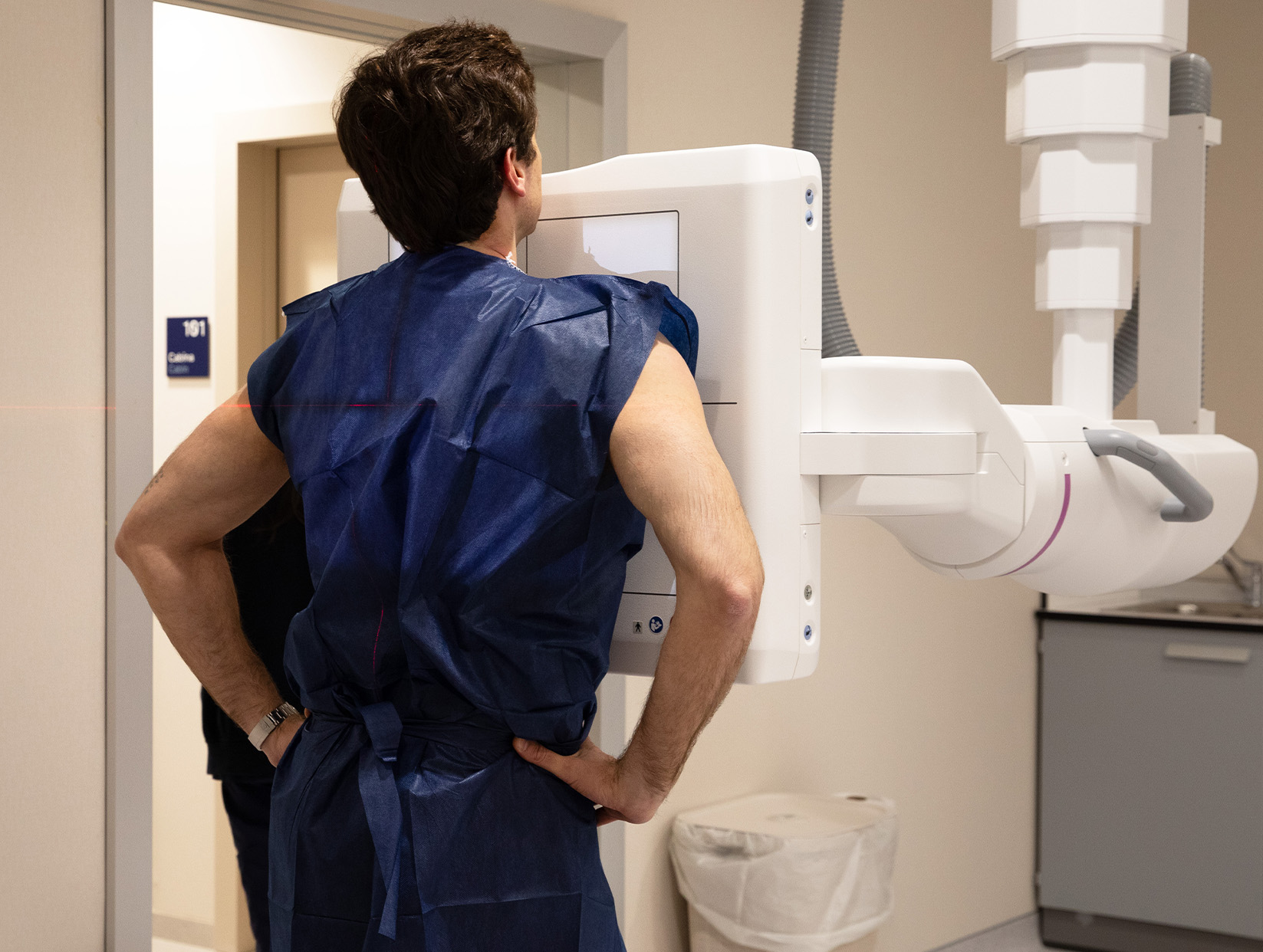
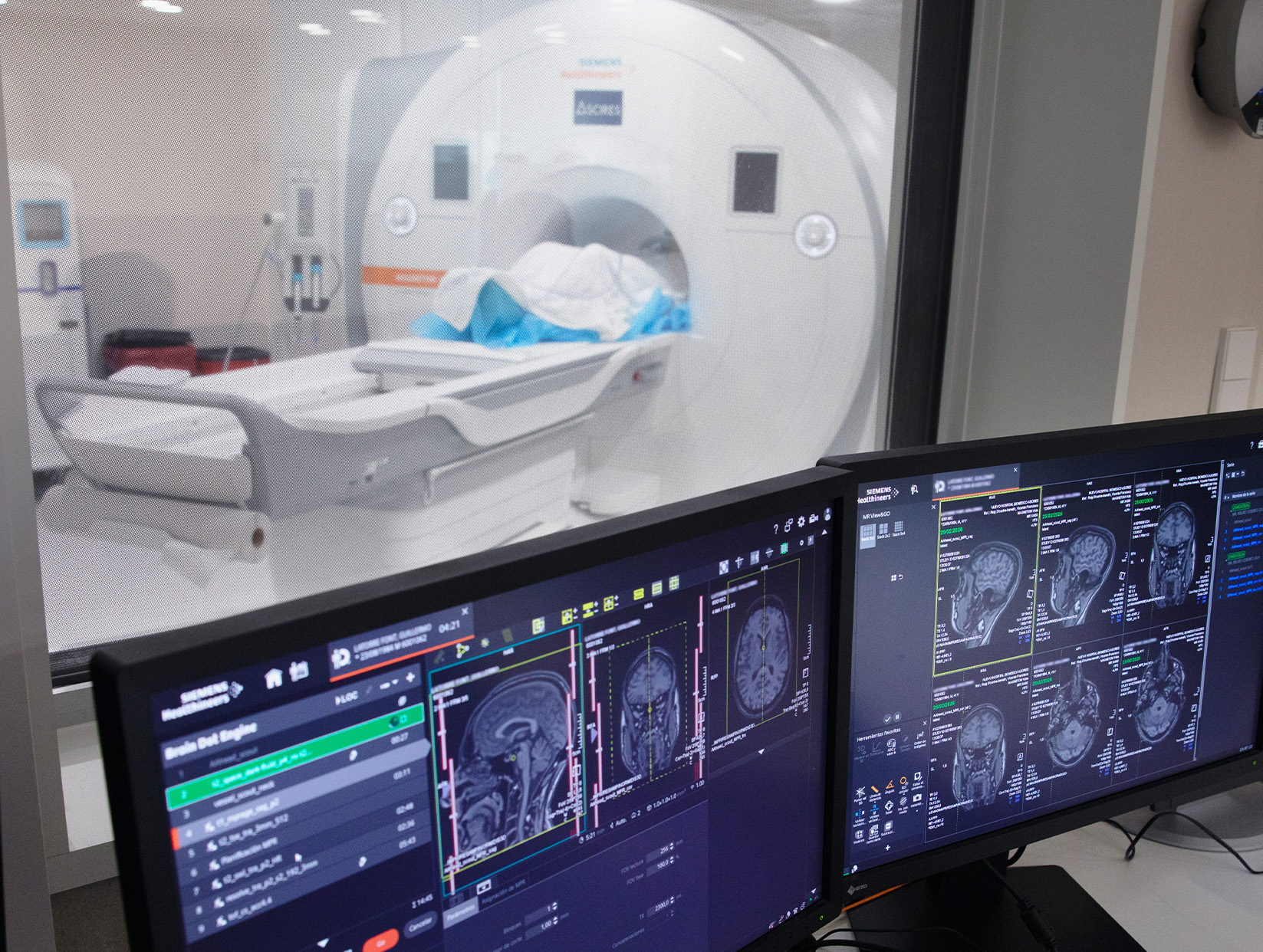
At Ascires, we are a leading centre for imaging techniques in the Valencian Community.
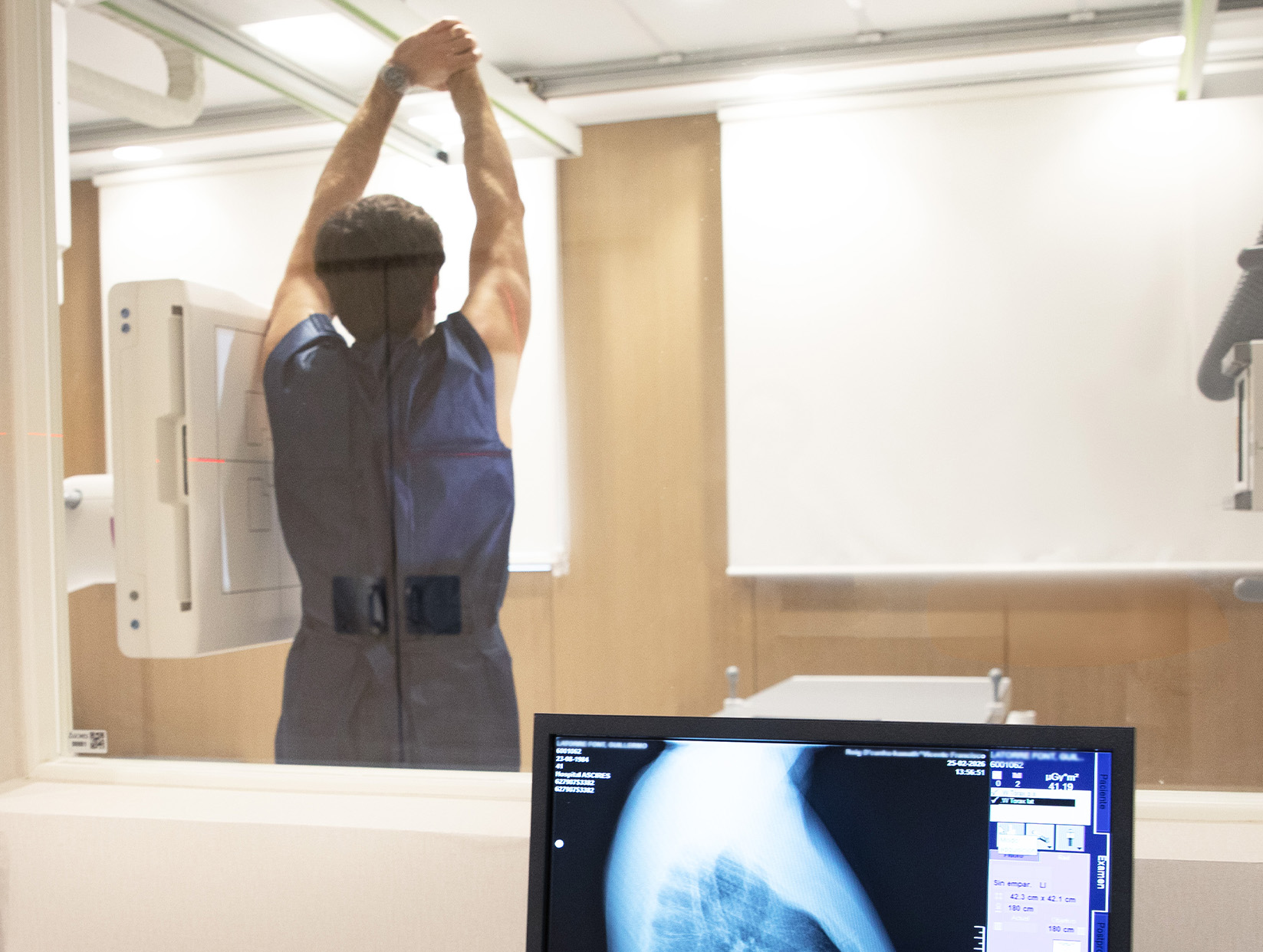
We use the Multitom RAX technology, which even allows us to capture dynamic X-ray images while standing, with the highest possible resolution.
Features
What makes our X-ray tests stand out
More information
At the Radiology Service of Ascires, we perform different types of X-ray examinations:
Related services

| Name | Address | Phone | |
|---|---|---|---|
| Castelló | |||
| Ascires Castelló | Dirección: Carrer de Betxí, 7, 12004 Castelló de la Plana, Castelló | Teléfono: 961 86 89 98 | Email: moc.sericsa@olletsac |
| Valencia | |||
| Ascires Campanar | Dirección: Radiodiagnóstico: Marqués de San Juan, 6 y 4 Consultas: Avenida Campanar 116 València | Teléfono: 96 340 40 77 | Email: moc.sericsa@ranapmac |
| Ascires Gandia | Dirección: Av. d’Alacant, 123 – Nave 6 46702 – Gandia | Teléfono: 96 186 89 99 | Email: moc.sericsa@aidnag |
| Ascires Sagunto | Dirección: C/ Advocat Fausto Caruana, 11 46520 – Puerto de Sagunto | Teléfono: 96 186 89 91 | Email: moc.sericsa@tnugas |
| Ascires Universitats | Dirección: C/ Menéndez y Pelayo, 25. 46010 Valencia | Teléfono: 963 40 47 90 | Email: moc.sericsa@ytisrevinu |
| Ascires Xàtiva | Dirección: Ronda Séquia de la Vila, s/n, 46800 – Xàtiva | Teléfono: 96 340 43 44 | Email: moc.sericsa@avitax |
X-ray, also known as radiography, is a medical imaging technique that allows visualisation of the inside of the human body in greyscale. It is used to detect fractures, dislocations and various conditions with high diagnostic accuracy.
In general, X-rays are not recommended during pregnancy, especially in the first trimester, unless strictly necessary and always under medical supervision. Although the ionising radiation used is low, it can pose a potential risk to the developing foetus, depending on the body area examined and the stage of pregnancy.
If you are pregnant or think you might be pregnant, it is very important that you inform us before any X-ray test is performed. At Ascires Hospital, whenever possible, we opt for alternative tests without radiation, such as ultrasound or magnetic resonance imaging without contrast. An X-ray is only indicated if the clinical benefit fully justifies the risk, and in that case, all necessary measures are taken to protect the baby.
An X-ray, also known as a radiographic study, is a diagnostic imaging test that allows visualisation of internal body structures, particularly bones. It uses a small dose of ionising radiation to capture black-and-white images that can reveal fractures, infections, lung obstructions, joint problems and many other medical conditions.
At Ascires Hospital, X-rays are performed quickly and safely, often serving as the first step in evaluating symptoms such as bone pain, trauma or breathing difficulties. Thanks to state-of-the-art digital equipment, we obtain high-quality images with minimal radiation exposure.
The amount of radiation used in a conventional X-ray is very low and considered safe for most patients. Doses are regulated and controlled by health regulations, and modern equipment minimises exposure without compromising image quality.
At Ascires, we follow strict radiological safety protocols. X-rays are only performed when clinically indicated, and sensitive body areas are always protected. Additionally, these tests are avoided in pregnant women unless strictly necessary and under medical supervision.
An X-ray usually takes between 5 and 10 minutes, depending on the area of the body being examined. Preparation is minimal, and in most cases, the patient only needs to remove clothing or metallic accessories from the area to be examined.
At our centre, the radiology report is available within a few hours, or at most within 24 hours. For urgent cases, our radiologists prioritise the analysis to provide immediate results. Reports can be collected in person or accessed online through our patient portal.
Yes, children can have X-rays, and it is a very common test in paediatrics to diagnose fractures, infections, respiratory or digestive problems, or bone malformations. Although X-rays use ionising radiation, the doses are very low and carefully adjusted according to the child’s age and weight, following paediatric radiology and radiation protection principles.
At Ascires, we use state-of-the-art digital equipment and specific protocols for paediatric studies, allowing us to obtain high-quality images with minimal exposure. In addition, our staff are trained to care for paediatric patients, providing a calm, safe and child-friendly environment to ensure the experience is as comfortable as possible for both the child and their family.
Ascires has the ENS certification with the MEDIA category for its medical centers in the Valencian Community and Madrid.