3T Magnetic Resonance Imaging in Valencia
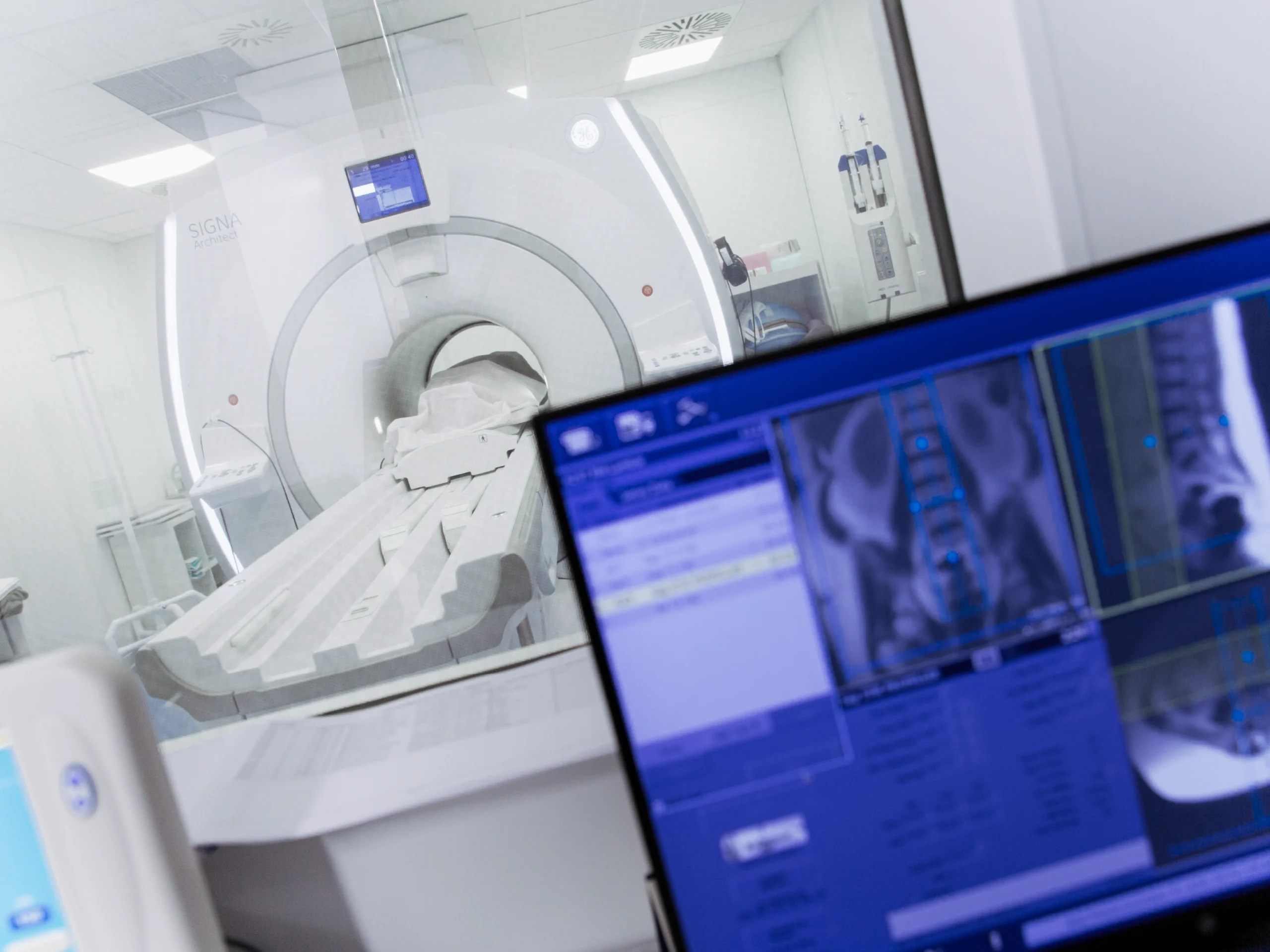
At Ascires, we are leaders in the Valencian Community in delivering accurate diagnoses using the most powerful Magnetic Resonance Imaging systems (3 Tesla) with the highest image quality.
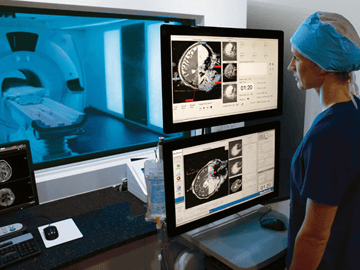
We now complement these studies with Artificial Intelligence applications to diagnose conditions even at their earliest stages, when they are virtually invisible to traditional imaging methods. This enables us to initiate treatment as early as possible and improve recovery outcomes.
Features
Why have your MRI scan at Ascires in Valencia?
At Hospital Ascires, our MRI scans deliver the highest possible resolution thanks to their high magnetic field strength (high-field MRI – 3 Tesla). This allows us to study organs, tissues and internal structures in detail and to detect lesions that are difficult to identify using lower-field imaging systems.
Cardiac Magnetic Resonance Imaging
We are the only centre in Spain with triple European accreditation for performing general, stress and congenital Cardiac Magnetic Resonance Imaging (CMR). Our cardiologists hold the highest level of European certification for the performance of CMR.
Cardiac magnetic resonance imaging is a radiation-free and highly safe technique used to study the anatomy and function of the heart. It provides detailed images of all cardiac chambers and valves.
It is used for the detection of congenital heart disease, coronary artery disease, cardiomyopathies, myocardial viability, as well as perfusion and ventricular function assessment.
Contrast administration
In some cases, an intravenous contrast agent is administered to enhance the visibility of certain structures or lesions. It is a safe and highly useful technique for detecting tumours, inflammation or vascular abnormalities. The physician will assess whether it is necessary in your case.
Types of Magnetic Resonance Imaging
Related services in Valencia

Magnetic resonance imaging is a highly effective diagnostic imaging method that allows clear and well-defined visualisation of each organ, facilitating the diagnosis of multiple lesions or diseases.
This test is non-invasive, does not use radiation and is virtually free of harmful effects for the patient, providing high-resolution anatomical and functional images of organs, tissues and non-bony structures of the body.
An MRI system consists of a large magnet, a scanner and a computer. Radiofrequency waves emitted by the scanner, together with the electromagnetic field generated by the magnet, stimulate the protons in the tissues being examined, causing them to align. The scanner captures the resulting energy and transmits it to the computer, where it is processed into images.
The resolution of the images depends largely on the strength of the magnet in the system. This magnetic field strength is measured in Teslas. Low-field MRI systems (with lower image quality) typically operate between 0.1 and 0.6 Tesla, whereas high-field MRI systems (with higher image resolution) operate between 1.2 and 3 Tesla.
All MRI scans performed at Ascires are high-field MRI studies.
In most cases, no special preparation is required to undergo a magnetic resonance imaging scan. If a contrast-enhanced MRI is needed, the medical team will administer the contrast agent via an intravenous injection. In this case, healthcare staff will inform you if fasting is required.
You must not enter the examination room with metallic objects (such as jewellery, watches or hair accessories), nor wearing make-up. All personal belongings should be left in the changing area you will access beforehand, following the instructions of the healthcare staff.
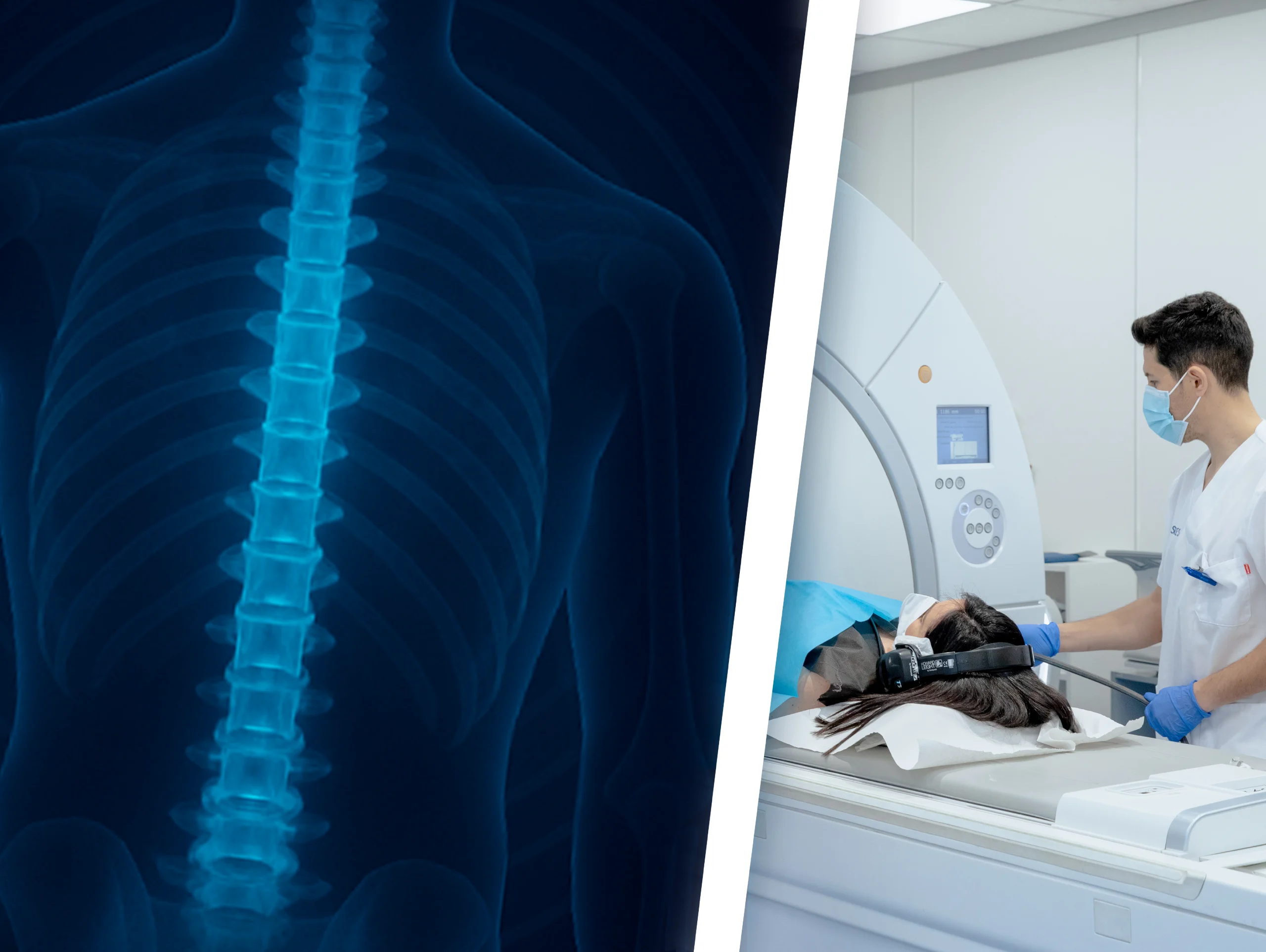
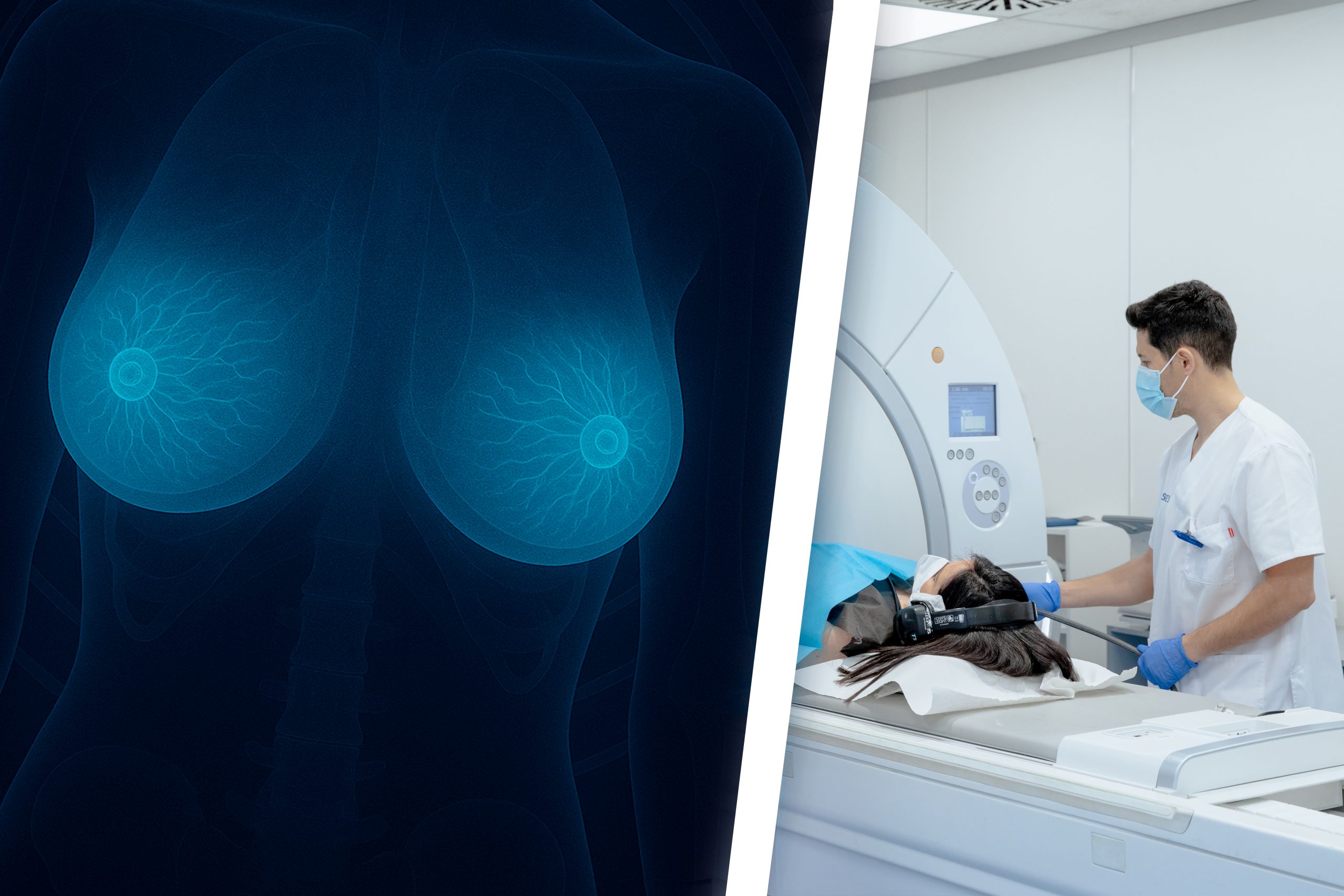
The patient will lie on the examination table, which will be moved into the scanner. If deemed necessary by the healthcare staff, an intravenous contrast agent may be administered to improve visualisation of certain parts of the body.
Throughout the duration of the scan, the patient must remain still to avoid affecting image quality.
It is important to know that this is a completely painless test, even when contrast is administered.
The equipment emits a loud noise, similar to constant hammering. However, we provide hearing protection to prevent acoustic discomfort.
During the scan, some people may experience claustrophobia. To make the experience more comfortable, healthcare staff will communicate with the patient throughout the procedure, providing instructions and reassurance. In addition, the patient will be given a call button that activates an alarm should they feel the need to stop the scan. If claustrophobia is severe, and depending on the clinical indication, the scan can be performed under sedation administered by healthcare staff, or an open MRI may also be considered.
Ascires has the ENS certification with the MEDIA category for its medical centers in the Valencian Community and Madrid.